Showing posts with label marketing. Show all posts

Marketing an iphone app

I recently made an iPhone app called OnSite and I have been seeking suggestions on the increasingly difficult task of marketing it. Here are the most interesting suggestions I have gotten...

1) Selecting relevant keywords and getting good reviews to move up app store search rankings. Also, having good app icon, copy and screenshots help get downloads. I got my app icon done at 99 designs. I am planning to add more custom graphics possibly with another 99 designs mobile app contest.

2) After a user uses the app 7 times you might prompt them to do a review. If they are using it that much, they will likely give a good review. My friend Evan that makes iExit said his rating improved by 1 and 1/2 stars.

3) Internet advertising using adwords, and unbounce campaigns can be used to A/B test for effective keywords, copy, and images. Also, search advertising is useful for harvesting demand, not creating it. So, may not be effective for a new type of app.

4) Viral features. Add a feature to "tell a friend email", unlock features if you post to social networks (eg. facebook connect), or include an ad for your app in an compelling feature that emails or posts to a social network.

5) Get app reviewed by mobile app blogs or niche blogs related to your product. You will need to prepare a media kit. There are services that will do this for you, although I don't know about the quality.

6) Include a link to email you complaints and feedback. If you implement the features let the people know and ask them to give you a good review.

7) Mobile Advertising like admob.

8) Make a free version of app or temporarily change the price to free for paid apps.

9) Make a video.

10) Get featured in the Apple app store. This, of course, is the holy grail, and may be difficult to achieve.

The main recurring advice is to make a great app, and that it may take several months of trying to get noticed. What strategies have you used?

3 Inspriational videos about marketing technology

I recently made an iPhone app, and I am thinking about the marketing aspect. Today these three videos came to mind. The theme in all three videos is to not focus on the features or technical specs, but focus on the experience, stories, people and emotions. The current site for my app lists nothing, but features. Over the next few weeks I will be thinking about how to take a boring business app and turn it into a story about people and making their lives better. What marketing inspires you?

1) Mad Men - The Carousel

2) Steve Jobs introducing think different commercials


3) Patrick McKenzie on marketing software to underserved markets

Crossing The Chasm

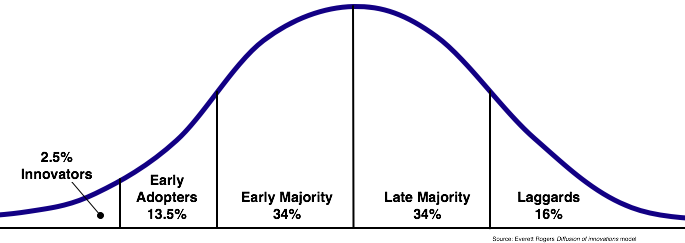
Crossing the Chasm is a marketing book for high tech companies selling disruptive technology to mainstream users. It assumes the company has traction with early adopters and outlines a plan for companies to “Cross the Chasm”, which is the gap in time between early adopters and the first mainstream users (early majority) in the technology adoption life cycle. (illustrated below).

Early adopters are visionary and driven by a dream. The early majority are pragmatists, and don’t want disruptive change. They want references from other pragmatists, not from early adopters. They are risk averse, loyal and like to buy from the market leader.

How To Cross the Chasm
The plan to cross the chasm is to target and dominate a niche market and use it as a base for further expansion. It’s a key point that a market in this context consists of customers that reference each other. The tighter bound a market is the more word of mouth and opportunity for sales referrals. Those sales references and referrals are what make the strategy viable versus just going after the entire mainstream market at once.

Which niche market to target first?
The decision for the niche market to target can be a difficult one because there is limited information about new markets and you need to move quickly. The conclusion is you should gather as much information, but the decisions should be driven by informed intuition.

Whole Product
Whereas early adopters may accept a minimal viable product, mainstream users want a whole product. A whole product is the ancillary products and services to make the product compelling to buy. Examples might be training, support, or after market parts. Often mainstream customers choose inferior products that are superior from a whole product perspective.

Competition
If there is no competition, it may be too early to cross the chasm. You need competition to validate the market. Mainstream users want to buy from the market leader. Although you want general competition, you also want to position your product as the best solution for your niche. Having a name (like “middleware” or “cloud computing”) for the market also helps validate it.

Distribution and Pricing
Direct Sales is the recommended distribution method for crossing the chasm. It allows you the best opportunity to control your destiny. After the market is dominated, the most efficient long term distribution channel should be considered. Premium pricing is recommended to reinforce your position as the market leader in your niche and the price has to be enough money to get the sales guys excited about selling it.

One example of this niche strategy that stands out to me is Blackberry. They so dominated the corporate business market that a myth persists that it’s still their primary market although it long ago crossed into the mainstream consumer market. Do you know any more examples of a company that got it’s foothold in the mainstream market through a niche?

Bad Marketing

I think MSNBC and CNBC need to change their names to NBC News and NBC Business, or NBC Money. MSNBC originally stood for the partnership between Microsoft and NBC. CNBC stands for consumer NBC. MSNBC and CNBC obscure the NBC brand, and it's not clear what is on the channels. Changing the names would be more bold, informative, and similar to Fox.